
7 min read
Setting up a grow room in an Auckland garage
The short version. An Auckland garage makes a good growroom once you deal with three local realities: humidity that sits high most of the year, a concrete slab that pulls heat out of pots in winter and radiates it back in February, and a building that was never meant to be sealed. Line the walls, get the floor off concrete, size extraction generously, and have any fixed wiring done by a registered electrician.
A garage is the most common indoor growing space in Auckland, and it is a genuinely good one - it is enclosed, it has power, and nobody needs the space for anything else. It is also damper than people expect, and that single fact drives most of what follows.
Why Auckland is different from the generic advice
Most growing guides are written for climates with dry winters and a proper temperature swing. Auckland has a humid subtropical climate: mild, damp winters and warm humid summers, with relative humidity that sits high year round and rarely gives you a naturally dry room.
| Season | What the garage does | What it means for you |
|---|---|---|
| Winter | Cool, damp; condensation on the slab and steel door | Mould pressure, cold root zones |
| Spring | Swings a lot day to night | Humidity spikes overnight |
| Summer | Heat soaks into the slab and stays | Extraction has to work hardest here |
| Autumn | Warm air, cooling surfaces | Worst condensation risk of the year |
Step 1: line the walls
Bare gib, timber or brick absorbs light and holds moisture. Lining with black-and-white film gives you a reflective, wipeable surface and stops light escaping through the wall.
Panda film goes up white side in, black side to the wall. Run it from the ceiling down so any condensation runs down the face of the film rather than behind it, and lap the joins in the same direction. The rest of the range is under ducting, film and hose.

Panda film by the roll - white to the plants, black to the wall.
Step 2: deal with the concrete floor
A slab is a giant heat sink with the whole ground underneath it. In winter it draws warmth out of your pots from below; in a hot February it holds the day's heat well into the night.
- Get pots off the slab - a pallet, a bench or a layer of insulation all help.
- Expect condensation on the slab in autumn. Film on the floor traps water underneath it, so leave a way for the surface to dry.
- Keep air moving at floor level; still air at the base of a canopy is where mould starts.
Step 3: extraction, sized for summer not for today
This is the purchase to get right. Work out the volume of the space and buy a fan that can replace it comfortably more than once a minute, because a carbon filter and a few bends will take a good share of the rated figure back. There is a full walk-through with worked examples in how to size an extraction fan and carbon filter.
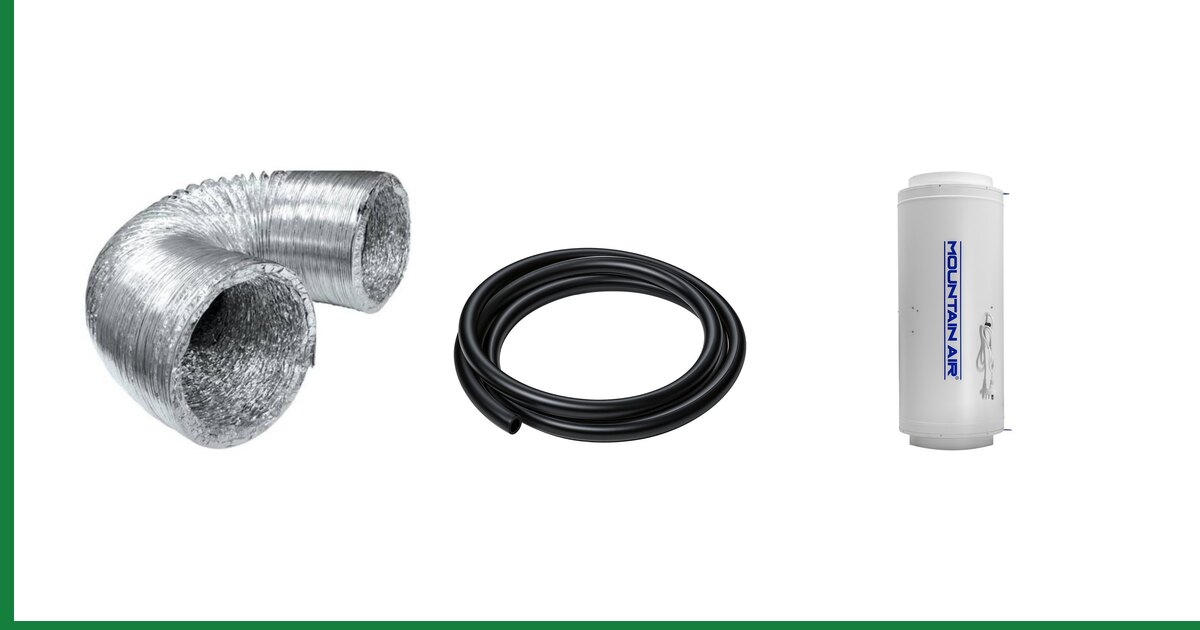
A matched pair such as the 250mm fan and filter combo removes the guesswork about flanges, and 250mm ducting keeps the run at one diameter. Take the shortest route out you can - through a high gable vent rather than the roller door if you have the choice, because warm air is already up there.
Where the air comes in matters too. A sealed garage with a big fan and no intake just pulls the film off the walls. Give it a low intake vent, ideally on the opposite side from the extraction, so air crosses the room rather than short-circuiting.
Step 4: water in, water out
Garages rarely have a drain where you want one. Plan the wet side before you fill the first pot: how water arrives, and where run-off goes.
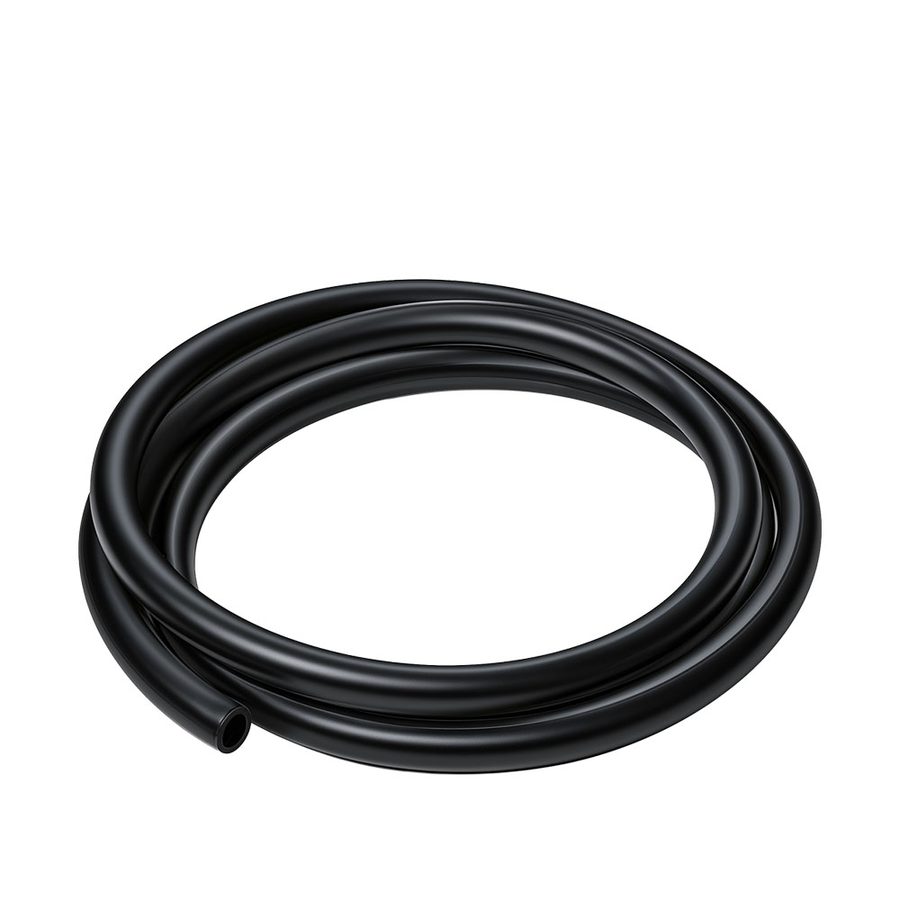
Hose by the roll in 19mm and 25mm covers feed lines, top-ups and run-off. Keep the run-off path simple and visible - a leak you cannot see under a bench in a garage will find the gib before it finds you.
Step 5: light, and the electrical reality
A complete kit such as the Kittset Deepbowl is the simplest starting point; there is a breakdown of the parts in what is in an HID grow light kit. Once you are switching more than a few lights, a light management unit handles the start-up load properly - see what a light management unit does.
On the electrical side, two things are not negotiable in New Zealand. Fixed wiring and any new circuits must be done by a registered electrician. And a garage is a damp environment, so protection, cable routing and keeping connections off the floor all matter more than they would in a spare bedroom. Extension leads daisy-chained across a wet slab are the single most common bad idea we hear described across the counter.
Step 6: pots and medium
A 27L pot is a practical size to finish in and still liftable when you are judging water by weight. In a warm garage the grated version gives the root zone more air. A 50 litre bag of coco will fill a couple of them - see growing in coco coir for how the watering routine differs from soil.
A sensible order to buy in
- Measure the space and work out the volume.
- Decide the lighting, because it sets the heat load.
- Size extraction and the filter to the room and the lighting.
- Line the walls and sort the floor.
- Run water and drainage.
- Pots, medium, nutrients.
- Add switching and control as the room grows.
We are at 46 Wharf Rd, Te Atatu Peninsula, so if you are in West Auckland you can bring the measurements in and walk out with the bulky parts the same day - see store hours or order online and collect. Everything also ships nationwide.
Frequently asked questions
Is a garage a good place for a growroom in Auckland?
Yes, provided you plan for humidity. Auckland's climate keeps relative humidity high most of the year, and a garage adds a cold concrete slab and a building that was never sealed. Line the walls, lift pots off the slab and size extraction generously and it works well.
Which way round does panda film go on the wall?
White side facing into the room to reflect light onto the plants, black side against the wall so no light passes through. Hang it from the top down and lap the joins downward so condensation runs over the face rather than behind it.
Do I need to insulate a concrete floor?
At minimum, get pots off the slab. Concrete pulls heat from the root zone in winter and holds the day's heat in summer, and both cost you consistency. A pallet, bench or insulating layer is usually enough.
Where should the extraction exit a garage?
As high as practical and by the shortest route - a gable vent or high wall penetration beats running duct down to the roller door, because the warmest air is already at the top of the room. Give the room a low intake vent on the opposite side so air crosses it.
Can I wire the power myself?
No. In New Zealand fixed electrical work must be carried out by a registered electrician. In a damp space like a garage that also covers protection, cable routing and keeping connections off the floor - it is worth doing properly.
How do I deal with condensation in autumn?
Autumn is the worst of it - warm air meeting cooling surfaces. Keep air moving, ventilate through the night rather than only during the light period, avoid trapping water under floor film, and keep an eye on the coldest surfaces such as the steel door, because that is where it appears first.