
5 min read
What is in an HID grow light kit: ballast, lamp, holder and reflector
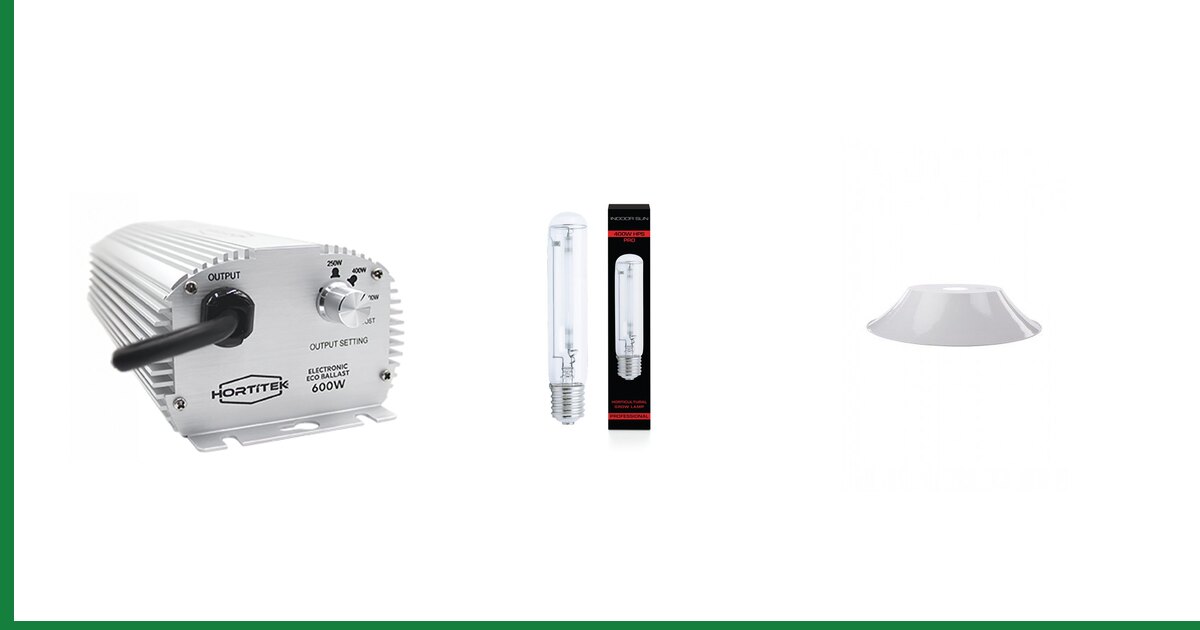
The short version. An HID grow light kit is four parts working together: a ballast to drive the lamp, the lamp itself, a holder and cable, and a reflector that decides where the light lands. Buy them as a matched kit if you want it simple, or piece by piece if you are replacing one part or building to an odd space.
High intensity discharge lighting is still the backbone of a lot of New Zealand growrooms, and it is easy to buy the wrong part when the terminology is unfamiliar. Here is what each piece does, and the two decisions that actually change your result.
The four parts
| Part | What it does | What to look for |
|---|---|---|
| Ballast | Strikes the arc and then regulates current to the lamp | Matched to lamp wattage and type |
| Lamp | Produces the light | Correct wattage; replaced on hours, not on looks |
| Lamp holder | Holds the lamp and carries the supply to it | Ceramic holder, cable in good condition |
| Reflector | Aims the light at the plants instead of the walls | Shape matched to the room height |
Without the ballast the lamp will not start. Without the reflector, a large share of your light goes sideways into a wall. Every part matters, but the reflector is the one that changes the shape of what you get.
Why the ballast is not optional
An HID lamp is not like a household bulb. It needs a high-voltage pulse to strike the arc, and then its resistance drops as it warms - left on a plain mains supply it would draw more and more current until it destroyed itself. The ballast does both jobs: it starts the lamp and then holds the current steady for the rest of the run.
Match the ballast to the lamp. Running a lamp on a ballast intended for a different wattage shortens the lamp's life at best.
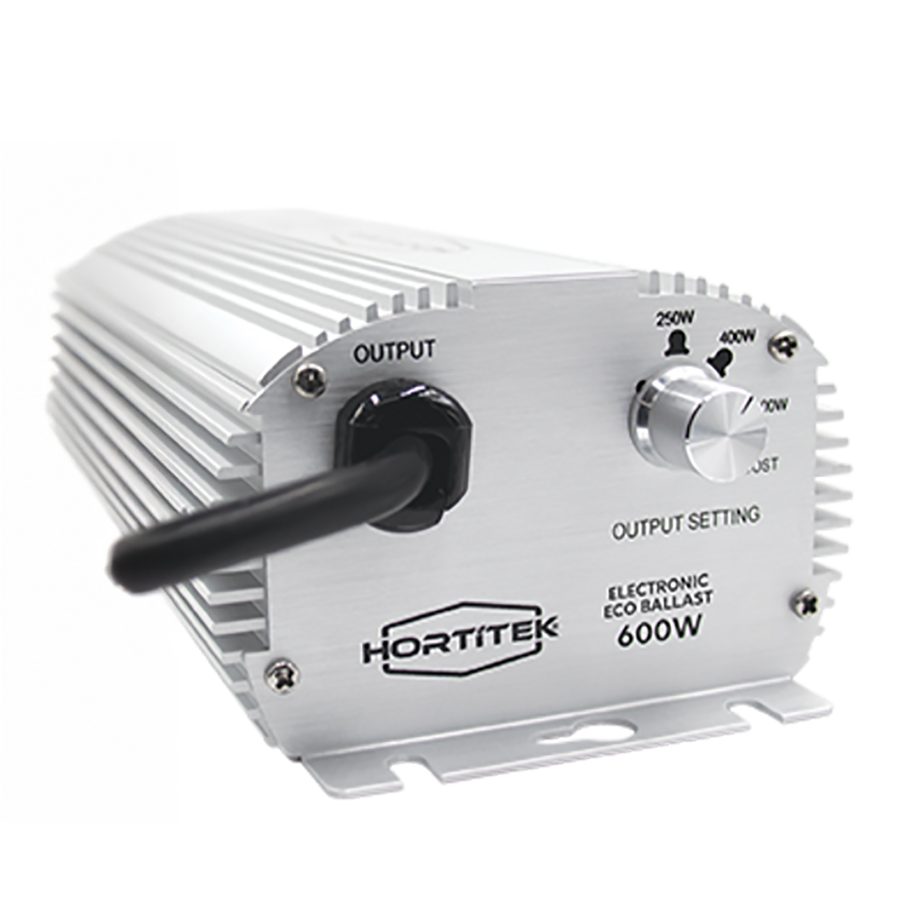
A ballast starts the lamp and regulates it - see the rest of the lighting parts range.
Batwing or deep bowl: the decision that matters most
Both reflectors take the same lamp. They distribute it very differently.
- Batwing. Open, wide and shallow. Spreads light across a broader footprint with a gentler peak, which suits rooms where the lamp has to hang close to the canopy. Being open, it also sheds heat into the room readily.
- Deep bowl. Deeper and more enclosed. Concentrates the beam into a tighter, more intense footprint that carries further down, which suits taller spaces and denser planting.
The practical test is ceiling height. In a low room, a deep bowl hung close gives you a hot centre and dim corners. In a tall room, a batwing spreads the light so wide that the plants in the middle never get the intensity they could have had.
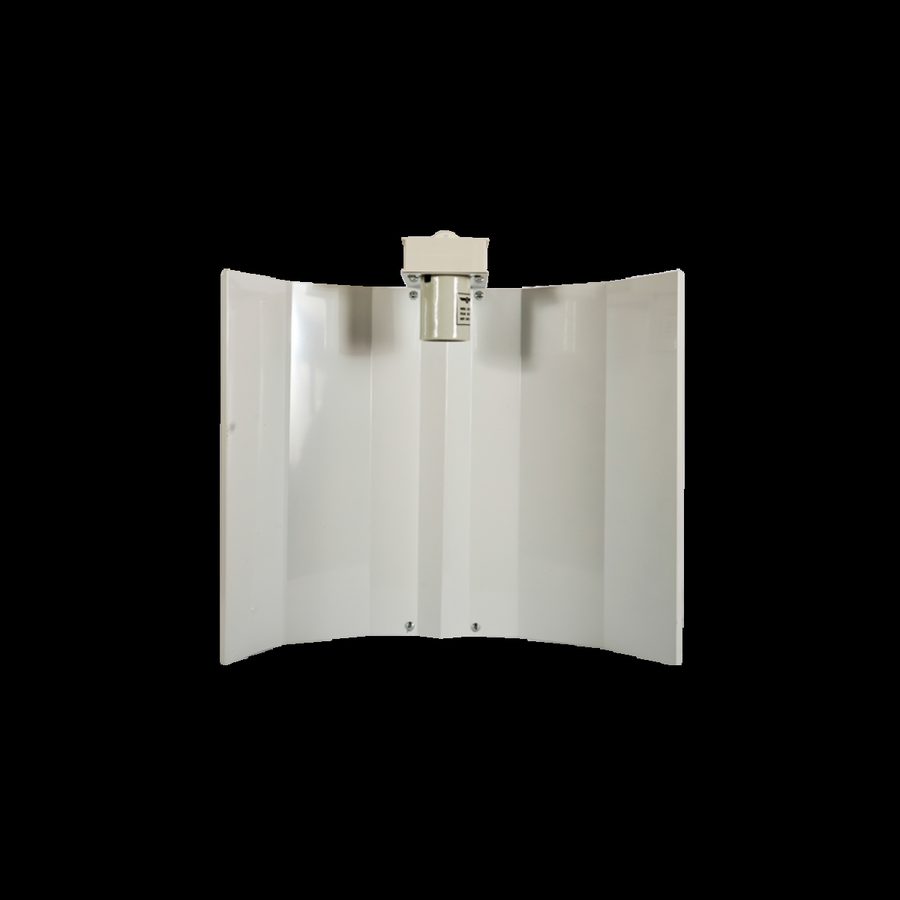
The Kittset Batwing - a complete kit, ready to hang.
Kit or parts?
A complete kit is the simpler path: the Kittset Deepbowl and Kittset Batwing arrive matched and ready to hang, which removes any question about whether the ballast suits the lamp. Both are listed under grow light kits.
Buy separately when you are replacing a failed part, adding a second reflector shape to an existing ballast, or building something to fit a room that does not suit a standard kit. The individual lamp, holder, batwing and deep bowl are all in lighting parts.
Hanging it safely
- Hang from a rated point, not from the tent frame unless the frame's stated load allows it.
- Keep the ballast off the floor and somewhere it can shed heat. Do not bury it under ducting.
- Run cables so they cannot touch the hot reflector or lamp.
- Never look directly at a running HID lamp, and let it cool fully before handling.
- Have any fixed wiring done by a registered electrician - in New Zealand that is a legal requirement, not a preference.
Heat is part of the design brief. An HID lamp puts real heat into the room. Size your extraction for the lighting you are running, not just the floor area - there is a walk-through in how to size an extraction fan and carbon filter.
Running more than one
Once you are switching several lights at once, the inrush current at start-up starts to matter, and plug-in timers are not built for it. A light management unit handles the switching and gives you one timer for the whole room - see what a light management unit does.
Frequently asked questions
What is in an HID grow light kit?
A ballast, a lamp, a lamp holder with its cable, and a reflector. The ballast starts and regulates the lamp; the reflector decides the shape and intensity of the light that reaches the plants.
Can I run an HID lamp without a ballast?
No. The lamp needs a high-voltage pulse to strike and then current limiting to stay stable. Connected straight to mains it would draw runaway current and fail almost immediately.
Which is better, a batwing or a deep bowl reflector?
Neither in the abstract - it depends on ceiling height. A batwing spreads light wide and shallow and suits low rooms where the lamp sits close. A deep bowl concentrates the beam and carries it further down, which suits taller rooms and denser planting.
Should I buy a kit or the parts separately?
A kit if you are starting out or want the parts matched for you. Separate parts if you are replacing a failure, running a second reflector on an existing ballast, or fitting an unusual space.
How far above the plants should the light hang?
It varies with wattage, reflector shape and how well the room is cooled, so use the manufacturer's guidance as the starting point and then use the back of your hand at canopy height: if it is uncomfortably hot there, the lamp is too close for that room.
Do HID lights need extra ventilation?
Yes. They put significant heat into the space, so extraction has to be sized for the lighting load as well as the room volume. Under-ventilated rooms force you to raise or dim the light, which gives back the intensity you paid for.