
5 min read
What a light management unit does, and when you need one
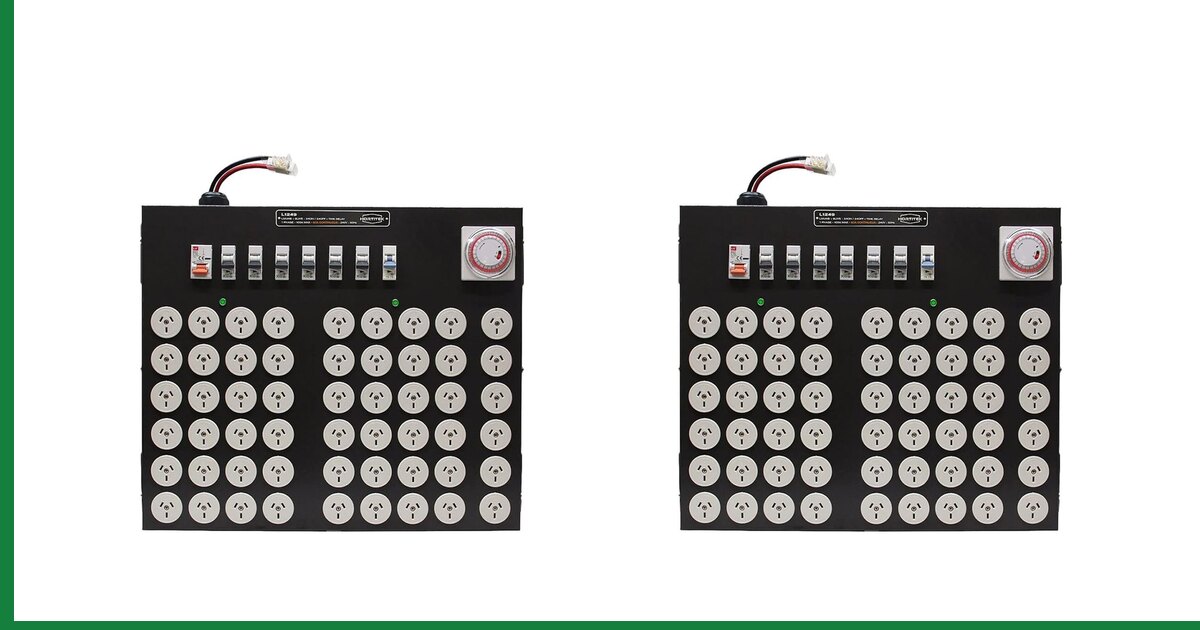
The short version. A light management unit is a purpose-built switchboard for a growroom: one timer input, several switched outputs, and contactors rated for the inrush that grow light ballasts produce at start-up. You do not need one for a single light. You start needing one as soon as several lights have to switch together, reliably, every day.
Most rooms grow into this problem rather than planning for it. One light on a plug-in timer works. Two lights on two timers drift apart. Four lights on a power board is where people start finding melted plugs, and that is the point at which the question gets asked.
What the unit actually does
- Takes one timing signal and applies it to every light at once, so the room has a single, shared light period.
- Switches the load through contactors built for the job, instead of through the small mechanical contacts inside a domestic timer.
- Distributes the supply properly, so the load is spread across circuits by design rather than by whichever socket was closest.
- Stages the start-up on units that offer it, bringing lights up in sequence instead of all at once.
Inrush current: the bit that catches people out
When a grow light strikes, it briefly draws far more current than its running figure. One light doing that is unremarkable. Six doing it in the same instant is a spike that plug-in timers were never designed for - which is why the failure is so often a timer whose contacts have welded closed, leaving the lights on permanently and nobody noticing until the plants tell you.
The failure that matters. A cheap timer usually fails on, not off. A room stuck in permanent light does not announce itself the way a dark room would.
Staged switching, where the unit brings lights up a few seconds apart, spreads that spike out. It is easier on the supply, on the ballasts, and on anything else sharing the circuit.
When it is worth it
| Setup | Reasonable approach |
|---|---|
| One light | A good quality timer is fine |
| Two to three lights | Workable on separate timers, but they drift and each is a failure point |
| Four or more lights | A light management unit starts to pay for itself in reliability alone |
| Any room you cannot check daily | Worth it earlier - the cost of a failure is a whole crop |
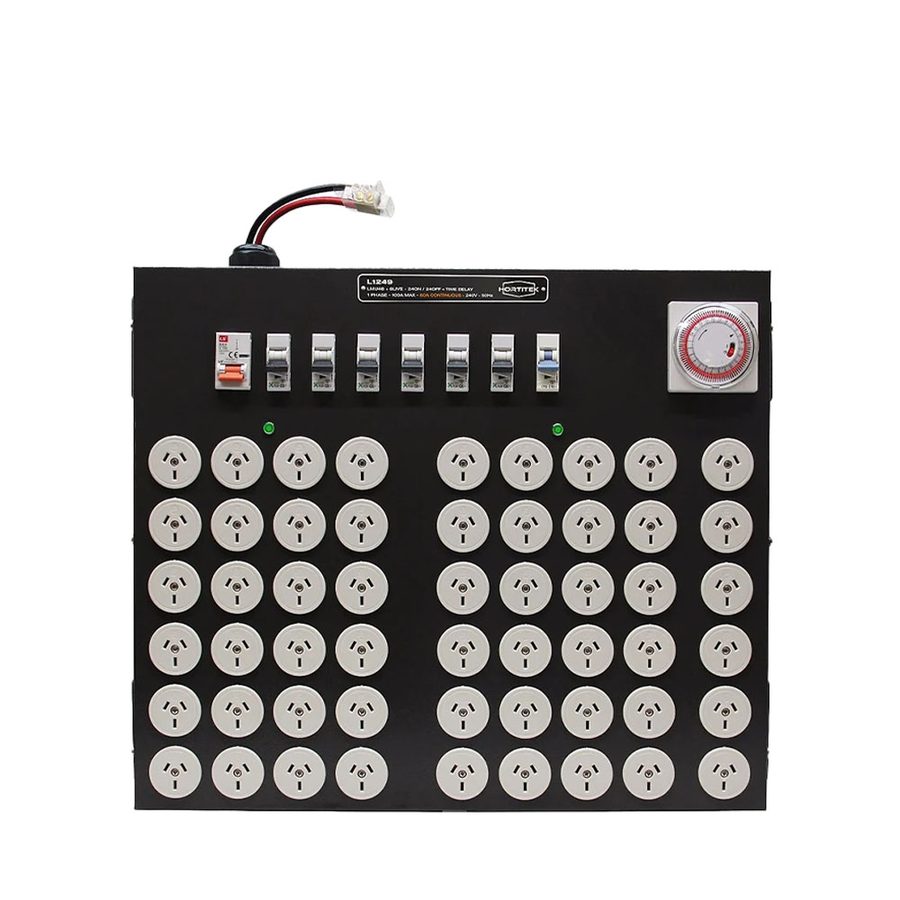
We stock the LMU 24, LMU 32 and LMU 48 under light management units. Which one suits depends on how many lights you are switching and what supply you have available, so it is worth a conversation rather than a guess - call the shop on 0226936698 or bring your details in to Te Atatu.
Installation is an electrician's job
This needs saying plainly. In New Zealand, fixed electrical work must be carried out by a registered electrician. A light management unit sits between your supply and a substantial load, and the whole point of buying one is that the switching is done properly. Have it installed and certified.
Things to sort out with your electrician before the unit arrives:
- What the total connected load will be with every light running.
- Whether the existing supply and protection can carry it.
- Where the unit will be mounted - accessible, dry, and with room to shed heat.
- How the timer signal reaches it.
What it does not do
A light management unit switches lights. It does not replace environmental control - it will not shut your lights down because the room got too hot unless it has been specifically set up with that capability. Extraction still has to be sized for the lighting load, which is covered in how to size an extraction fan and carbon filter, and the lights themselves still need the right ballast and a lamp replaced on schedule, which is covered in when to replace a grow lamp.
Buying it alongside the rest
If you are building a multi-light room from scratch, work out the lighting first, then the extraction, then the switching - in that order, because each one sizes the next. Our grow light kits and lighting parts cover the first step, fans and filters the second.
Frequently asked questions
What is a light management unit?
A switchboard built for growrooms. It takes a single timer input and switches several grow lights through contactors rated for the inrush current that ballasts produce at start-up, rather than through the contacts of a domestic plug-in timer.
Do I need one for a single light?
No. One light on a quality timer is perfectly reasonable. The case builds as you add lights, and it becomes fairly clear-cut at four or more.
Why not just use a power board and timers?
Because of inrush current. Several ballasts striking at the same moment produce a spike well above their running load, and domestic timers and boards are not built for repeated switching of that kind. The usual failure is welded contacts, which leaves the lights permanently on.
What does staged switching mean?
The unit brings the lights up a few seconds apart instead of all together, which spreads the start-up current spike rather than presenting it to the supply in one hit.
Can I install a light management unit myself?
No. In New Zealand fixed electrical work must be done by a registered electrician, and this unit sits between your supply and a large load. Buy the unit, then have it installed and certified.
Which size should I buy?
It depends on how many lights you are switching and what supply you have available. We stock the LMU 24, 32 and 48 - talk it through with us or with your electrician before ordering rather than sizing it from the name alone.