
5 min read
How to size an extraction fan and carbon filter for your grow room
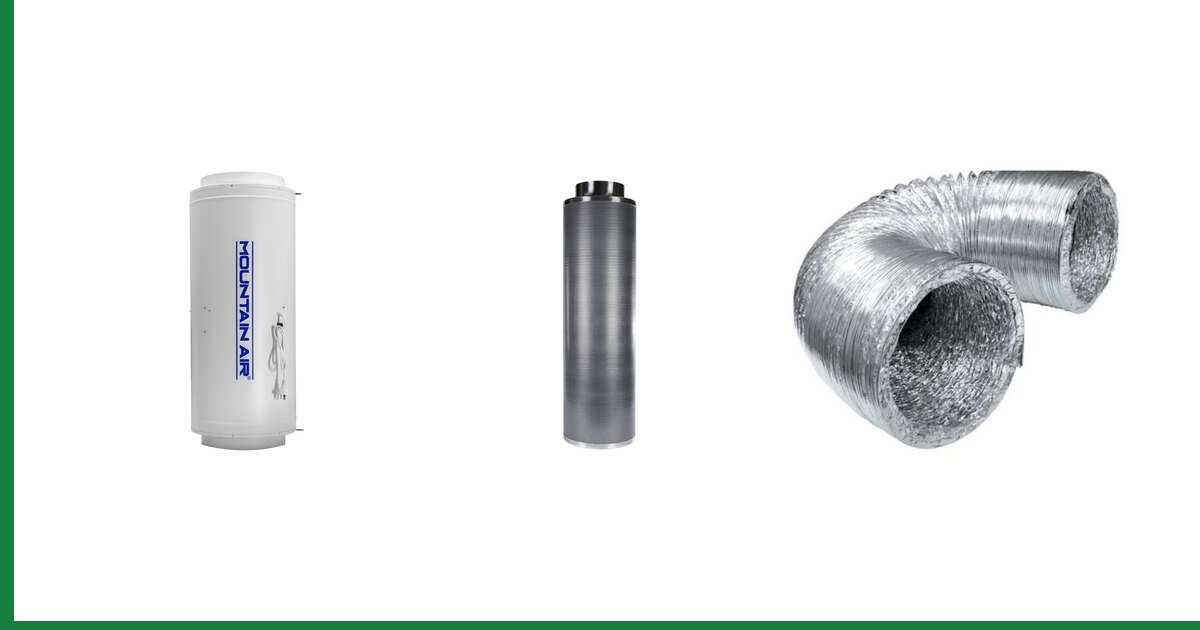
The short version. Work out your room volume in cubic metres, then look for a fan that can move that volume roughly once a minute. Add headroom - a carbon filter and a few bends of ducting can take 25 to 40 per cent off a fan's rated output, so a fan that is exactly big enough on paper will be undersized in the room.
Extraction is the one purchase that decides whether the rest of your setup can do its job. A light you cannot cool has to be dimmed or raised. Nutrients cannot fix a plant sitting in stale, humid air. And a carbon filter only works if enough air is being pulled through it. Here is how to size it properly, with the arithmetic done for the room sizes we get asked about most.
Step 1: the volume of the room
Length times width times height, in metres. A 2.4m by 1.2m space with a 2m ceiling is 5.8 cubic metres. That is the number everything else hangs off.
Step 2: how fast you want to replace it
The working rule for a room with a light in it is one full air change per minute. Multiply the volume by 60 to get the cubic metres per hour you need on paper.
| Room | Volume | Air changes/min | On paper | Buy at least |
|---|---|---|---|---|
| 1.2 x 1.2 x 2.0m | 2.9 m³ | 1 | ~173 m³/h | ~250 m³/h |
| 2.4 x 1.2 x 2.0m | 5.8 m³ | 1 | ~346 m³/h | ~500 m³/h |
| 3.0 x 3.0 x 2.4m | 21.6 m³ | 1 | ~1,296 m³/h | ~1,800 m³/h |
| 5.0 x 4.0 x 2.7m | 54 m³ | 1 | ~3,240 m³/h | ~4,500 m³/h |
The last column is the one to shop from. It carries roughly 40 per cent headroom, which is what the filter and the ductwork will quietly take back.
Step 3: the things that eat your airflow
- The carbon filter. The single biggest loss. Air has to be pulled through a packed bed of carbon, and the resistance climbs as the filter ages.
- Bends. Every 90-degree elbow costs you. Two gentle 45s beat one sharp 90.
- Length. Friction adds up over a long run, so keep it short.
- Crushed or concertinaed ducting. Flexible duct left bunched up behaves like a much narrower pipe. Pull it taut.
- A dirty intake. Air has to get in as freely as it goes out, or the fan is fighting a vacuum.
Step 4: matching the filter to the fan
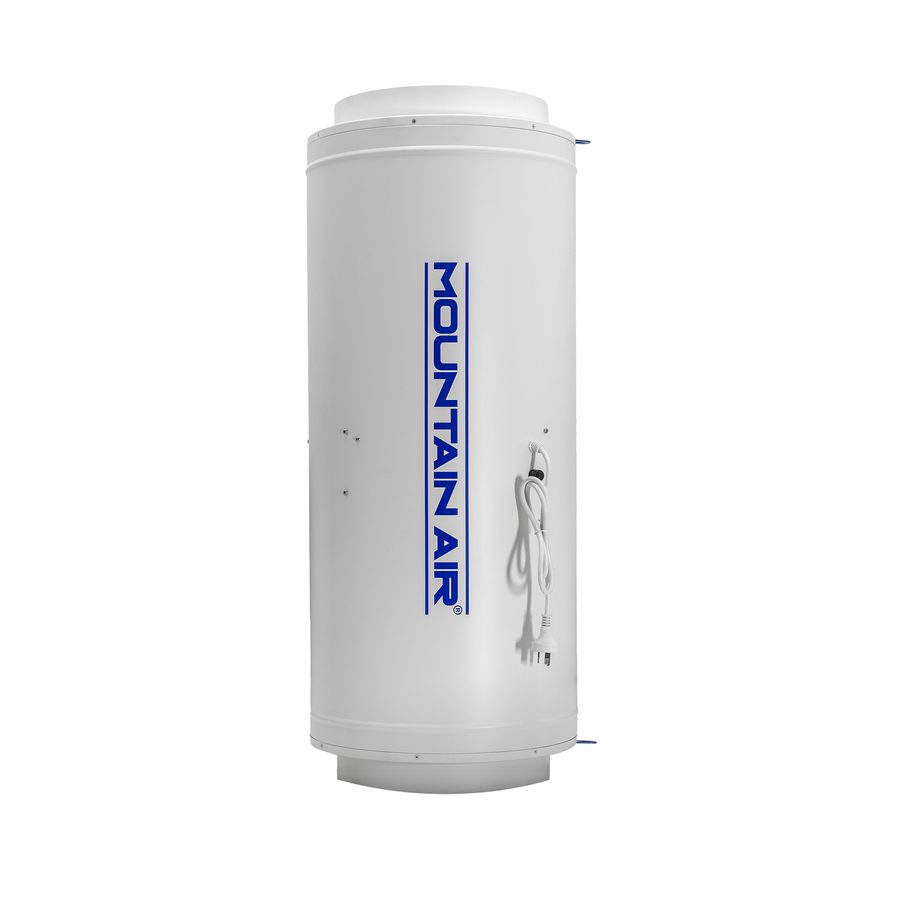
A carbon filter should be rated at or above the fan's airflow. Undersize the filter and you throttle the fan and shorten the carbon's life at the same time, because the air is being dragged through faster than the carbon can work on it.
The simplest way to avoid a mismatch is to buy them as a pair. Our 250mm fan and filter combo and 315mm combo come sized to each other; if you already have one half, the 250mm and 315mm filters are sold on their own. Everything is together on the fans and filters page.
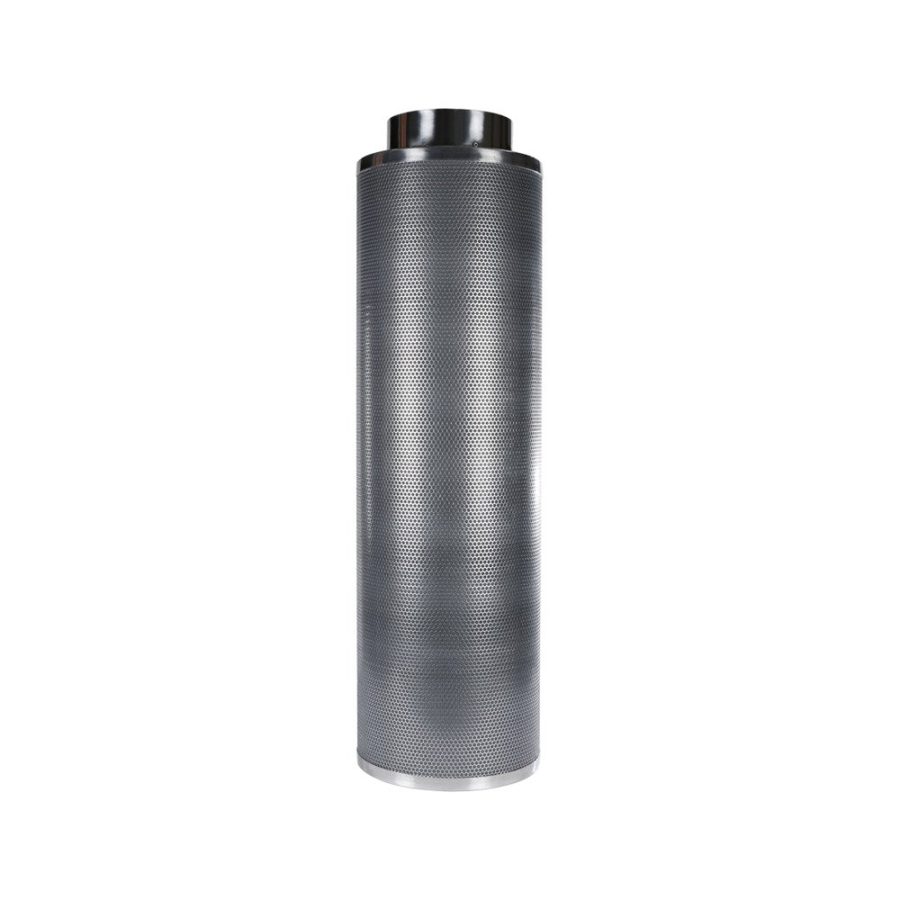
The 315mm carbon filter pairs with a 315mm fan and 315mm ducting.
Step 5: the ducting
Match the ducting to the collar on the fan - a reducer in the run is another restriction you do not need. We stock 250mm and 315mm ducting alongside the rest of the ducting, film and hose range.
Layout tip. Pull air through the filter and push it out, rather than blowing into the filter. Mounting the filter at the far end, fan after it, keeps the noisy part away from the intake and makes the filter easier to reach when it needs changing.
Noise, and why oversizing helps
A large fan running at part speed is usually quieter than a small fan flat out, and it has capacity in reserve for the hottest week of summer. If noise matters, buy a size up and run it slower rather than buying exactly enough and running it at maximum.
A worked example
A 2.4 x 1.2 x 2.0m room is 5.8 cubic metres, so 346 m³/h on paper. Add a carbon filter, four metres of ducting and two bends and you want something closer to 500 m³/h in the box. Fit the filter inside the room at the far end, the fan after it, and the shortest possible run out through the wall. If the room sits in an Auckland garage that bakes in February, size up again rather than planning to live with it.
Frequently asked questions
How do I calculate the fan size for a grow room?
Multiply length by width by height in metres to get the volume, then multiply by 60 for cubic metres per hour at one air change a minute. Add roughly 40 per cent on top to cover the carbon filter and ducting losses, and shop from that final figure.
How much airflow does a carbon filter cost me?
Expect a noticeable drop - a filter plus a few bends of ducting commonly takes 25 to 40 per cent off a fan's rated output, and the loss grows as the carbon loads up. That is why the filter has to be rated at or above the fan rather than below it.
Should the fan push into the filter or pull through it?
Pull through it. Put the filter first, the fan after it, and exhaust out. It keeps the filter accessible, keeps positive pressure out of the filter body, and puts the fan noise further from the room intake.
Can I use 250mm ducting on a 315mm fan?
You can physically reduce it, but you should not. Necking the run down adds resistance exactly where you are trying to avoid it. Match the ducting, filter and fan to the same diameter.
Is it bad to buy a fan that is too big?
Not usually. A larger fan run at part speed is generally quieter than a small one at full speed and leaves capacity for hot weather. The practical limits are price, physical space and making sure enough replacement air can get into the room.
Do I need an intake fan as well?
Often not - many rooms run passive intake, with a vent large enough that the extraction fan can pull air in freely. If the walls of a tent visibly suck inwards, the intake is too small before the fan is too big.