
5 min read
Carbon filters: how long they last and how to make them last longer
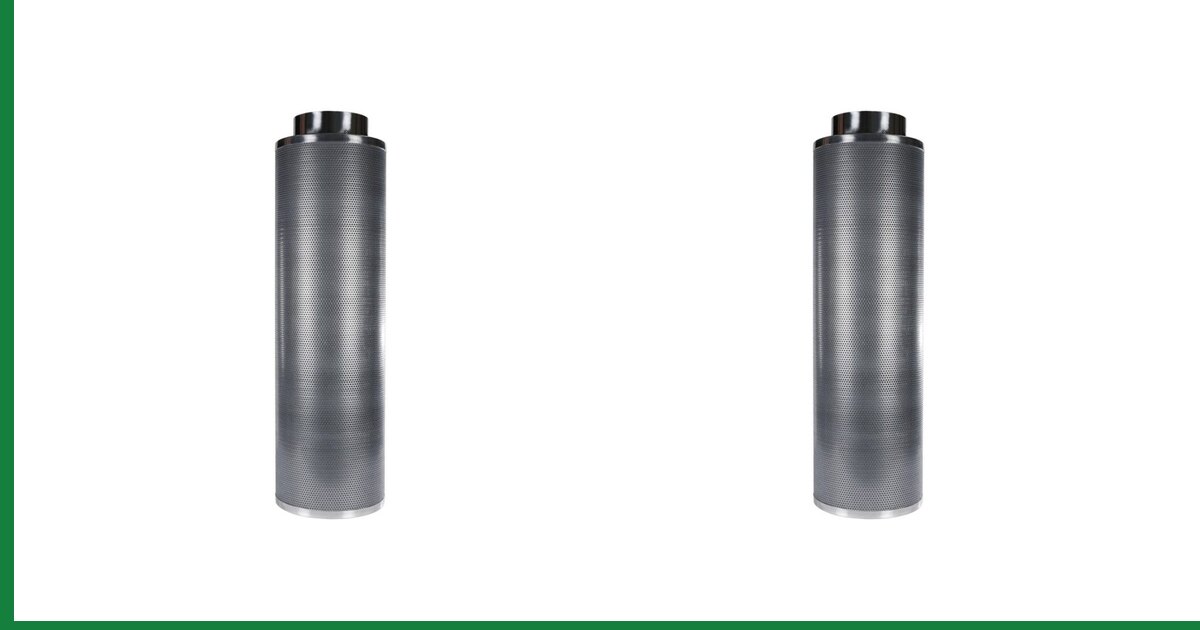
The short version. A carbon filter in typical indoor use lasts somewhere between about 12 and 24 months. Humidity is what kills them early - carbon that is constantly damp adsorbs water instead of odour. Keep relative humidity under control, use a pre-filter and keep it clean, and never run the filter through a wet period it does not need to be in.
Carbon filters do not fail loudly. There is no warning light and no drop in airflow you would necessarily notice day to day. One week the room simply smells, and by then the carbon has been saturated for a while. Understanding what uses it up makes the difference between replacing one every year and getting two good seasons.
How a carbon filter actually works
Activated carbon is enormously porous - the internal surface area of a handful is measured in thousands of square metres. Odour molecules passing through stick to that surface, a process called adsorption. The filter is not destroying anything; it is holding it. When the available surface is full, the filter stops working, and no amount of airflow brings it back.
The point people miss. Water vapour is adsorbed too, and it competes for exactly the same surface. A filter run in a persistently humid room spends its capacity on moisture instead of odour. Humidity control is carbon filter maintenance.
What shortens a filter's life
| Cause | What it does | What to do instead |
|---|---|---|
| High humidity | Carbon fills with water vapour | Keep RH in a sensible band; ventilate at night |
| No pre-filter, or a clogged one | Dust coats the carbon bed | Wash or replace the sleeve regularly |
| Undersized fan | Air dwells too long or short-circuits | Match filter and fan ratings |
| Running it when nothing smells | Uses capacity for nothing | Bypass or remove it outside the odour period |
| Storing it unsealed | Adsorbs whatever is in the shed | Bag it if it is coming off the system |
The pre-filter is the cheap part that protects the expensive part
The fabric sleeve around the filter body is there to catch dust before it reaches the carbon. It is also the part most often ignored until it is grey and stiff. Take it off every few weeks, shake it out, wash it if it needs it, and let it dry completely before it goes back on. Putting a damp sleeve back is the exact mistake this whole article is about.
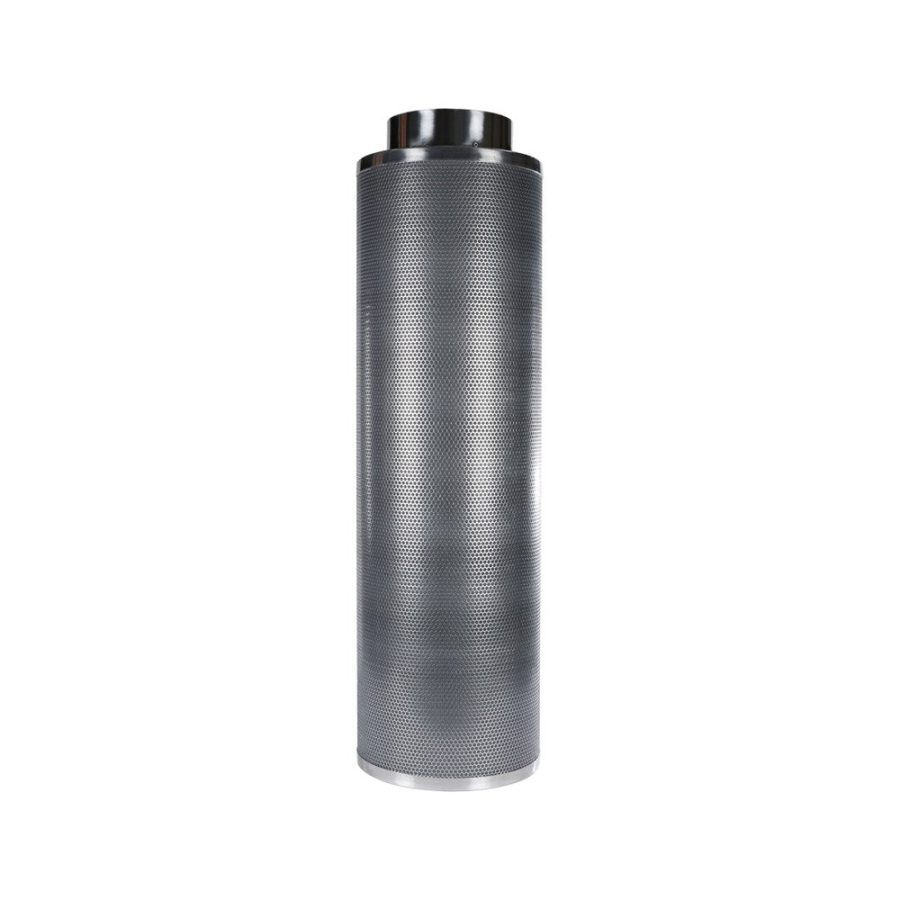
The 250mm carbon filter, and the 315mm for larger rooms.
Mounting it so it lasts
- Filter first, fan after. Pull air through the carbon rather than blowing into it.
- Hang it level. A filter on a slope channels air down one side, so half the bed does most of the work.
- Leave clearance. Air has to enter the whole circumference, so do not push it flat against a wall or into a corner.
- Keep the run short. Match the ducting to the flange and pull the flexible duct taut instead of leaving it concertinaed.
Testing whether it is still doing anything
The honest test is your nose, and it has to be someone else's nose. You go blind to a smell you live with. Have someone walk in from outside and tell you what they notice at the exhaust point, not in the room.
Other signs the carbon is done:
- The exhaust air smells like the room rather than like nothing.
- The filter feels noticeably heavier than you remember - that is usually absorbed moisture.
- Airflow has dropped and a clean pre-filter has not brought it back.
Can you recharge or wash carbon?
Not in a home setting. Industrial reactivation uses high-temperature steam under controlled conditions; baking a filter in a domestic oven does not reverse adsorption and is a fire risk on a component that was never designed for it. Washing packs the bed and blocks the airflow paths. When a filter is finished, replace the filter.
Buying a replacement
Match the new filter to the fan you already own, not to the old filter's age. If the fan has been struggling, this is the moment to look at whether the pair were sized right in the first place - there is a full walk-through in how to size an extraction fan and carbon filter. Buying the two together as a 315mm combo or 250mm combo removes the guesswork; single filters and fans are listed under fans and filters.
We keep these on the shelf in Te Atatu, so you can order online and collect rather than waiting on freight for a bulky item.
Frequently asked questions
How long does a carbon filter last?
Commonly between about 12 and 24 months in typical indoor use. The range is wide because humidity, dust and how many hours it runs matter more than the calendar. A filter used in a damp room can be finished well inside a year.
Can I recharge or wash activated carbon at home?
No. Reactivating carbon needs high-temperature steam in industrial conditions. Home baking does not restore it and is a genuine fire risk, and washing compacts the bed and chokes airflow. Replace the filter instead.
Why does my room still smell with a new filter fitted?
Usually air is escaping before it reaches the filter. Check for gaps around doors and cable entries, make sure the room is under slight negative pressure, and confirm the fan is pulling through the filter rather than pushing into it.
Does humidity really ruin carbon filters?
It is the most common cause of a short life. Water vapour is adsorbed onto the same internal surface that odour needs, so a filter in a persistently humid room fills up with moisture and has less capacity left for anything else.
How often should I clean the pre-filter?
Check it every few weeks and wash it whenever it looks loaded. Let it dry fully before refitting - a damp sleeve puts moisture straight into the carbon, which is the thing you are trying to avoid.
Should the filter go inside the room or outside?
Inside, at the far end from the intake, with the fan after it. That way the filtered air is what travels through the ducting, and any leak in the duct run is already clean air.